Why Realtor Lead Gen Is the Foundation of a Sustainable Business

Sam McKinney
Founder & Lead Strategist • December 17, 2025
Overview
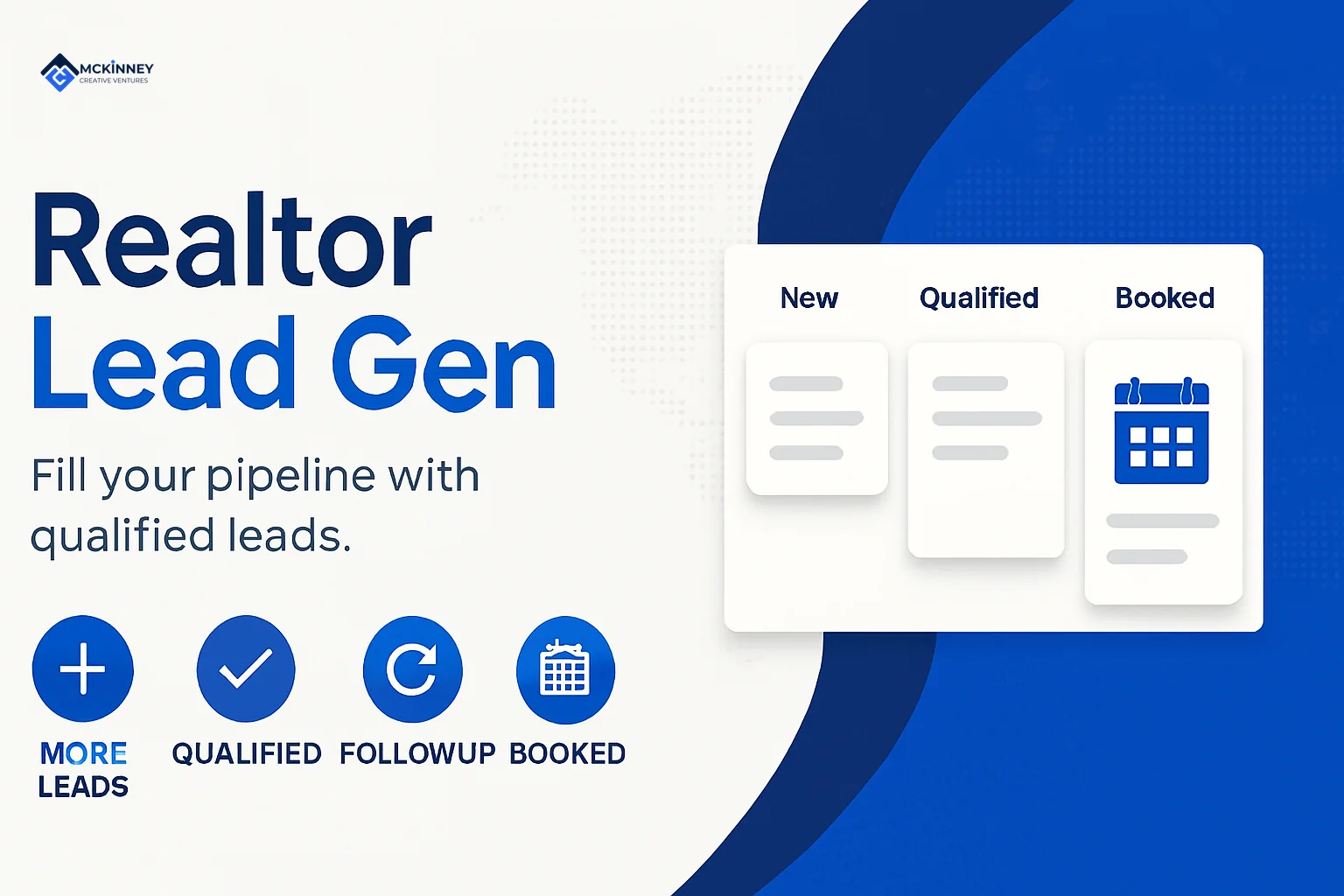
Realtor lead gen is the process of attracting potential buyers and sellers, capturing their contact information, and converting them into clients through consistent follow-up.
Realtor lead gen is the process of attracting potential buyers and sellers, capturing their contact information, and converting them into clients through consistent follow-up and relationship building. Here's what you need to know:
Core Lead Generation Strategies:
- Online: SEO, paid ads, social media, IDX websites, content marketing
- Offline: Networking, referrals, community events, open houses
- Tools: CRM systems, automation, landing pages, lead magnets
- Success Factors: Speed of follow-up, lead quality, conversion tracking, ROI measurement
Industry data shows that 70% of new agents cite lead generation as their most challenging obstacle. The problem? Most agents rely too heavily on referrals and sphere of influence, which creates unpredictable income. When those sources dry up, the business struggles.
The solution isn't working harder. It's building a system that generates leads consistently, whether the market is hot or cold.
This guide combines proven offline tactics with modern digital strategies to help you build a predictable pipeline. You'll learn how to optimize your website, leverage paid and organic channels, automate follow-up, and measure what matters.
The goal is simple: stop chasing deals and start attracting clients who choose you.
I'm Sam McKinney, and I've spent over 15 years helping service-based businesses, including real estate professionals, build marketing systems that drive consistent realtor lead gen. At McKinney Creative Ventures, I focus on turning fragmented efforts into streamlined systems that work.
Building Your Digital Foundation: Your 24/7 Sales Rep
Your real estate website isn't just an online brochure; it's your most dedicated sales representative, working around the clock. For realtors in the East Metro Twin Cities, MN, St. Croix Valley, WI, and surrounding areas, a strong digital foundation is non-negotiable. It's where potential clients first encounter your brand, assess your expertise, and decide if you're the right agent for their journey.
We emphasize a mobile-first design because a significant portion of your audience will access your site from their phones. If your site isn't fast and easy to navigate on a mobile device, you're losing leads before they even begin. Your Unique Value Proposition (UVP) should be clear and present throughout your site, articulating what makes you different from every other agent in Woodbury, MN, or Hudson, WI. Are you a local expert, a master negotiator, or a specialist in a particular neighborhood? This differentiation helps you stand out. Integrating an IDX feed is crucial, as it allows visitors to search for properties directly on your site, keeping them engaged and providing valuable data about their interests.
Building a High-Converting Website for Realtor Lead Gen
To truly make your website a lead generation powerhouse, it needs to be optimized for local search. This means focusing on Local SEO. We guide our clients to use geo-modified keywords like "homes for sale in Stillwater, MN" or "realtor in River Falls, WI" throughout their site content. This helps search engines understand your local expertise and connect you with local buyers and sellers. You can use resources like Google Keyword Planner guidance and local SEO strategies to identify what your local audience is searching for.
Structured data, which helps search engines understand the content on your pages, is also vital for listings. For example, marking up your property listings with schema.org ensures that details like price, location, and property type are easily indexed and displayed in search results. Don't forget your Google Business Profile; it's a free, powerful tool for local visibility, especially for agents serving areas like Cottage Grove, MN, or New Richmond, WI. Finally, every page on your site should have clear, compelling Calls to Action (CTAs) that guide visitors toward the next step, whether it's "Search Homes," "Get a Home Valuation," or "Contact Us."
Using Lead Magnets and Landing Pages to Capture Interest
Once potential clients land on your site, you need effective ways to capture their information. This is where lead magnets and dedicated landing pages come into play. A lead magnet is a valuable piece of content or a tool you offer for free in exchange for contact information. Popular examples for real estate include:
- Home valuation tools: "What's Your Home Worth in Lake Elmo, MN?"
- Seller checklists: "Preparing Your Home for Sale in Maplewood, MN."
- Neighborhood guides: "Ultimate Guide to Living in Hudson, WI."
These provide immediate value and establish your expertise. Your landing pages, designed specifically to promote these lead magnets, should be clean, focused, and have a single objective: to get the visitor to take one specific action. They should feature a clear value proposition and frictionless forms, meaning only ask for essential information like name and email. The fewer fields, the higher the conversion rate. For example, research shows that reducing form fields from five to three can significantly improve conversions.
Mastering Online Realtor Lead Gen: From Your Website to Social Media
Beyond your website, the digital world offers a vast landscape for realtor lead gen. Our strategy includes a robust content marketing plan that establishes you as an authority in your local market. Blogging regularly on topics relevant to buyers and sellers in the Greater Twin Cities Metro or St. Croix Valley, for instance, can attract organic traffic and demonstrate your knowledge. Video marketing is also incredibly powerful. Short, engaging videos showcasing local communities, property tours, or answering common real estate questions can capture attention and build trust.
Leveraging Social Media to Build Community and Attract Clients
Social media platforms are not just for sharing personal updates; they are dynamic tools for building community and attracting clients. For real estate agents, the top three sites used for professional use are Facebook, Instagram, and LinkedIn.
- Facebook: Excellent for building community groups, sharing local events, and running targeted ads to residents of specific areas like Woodbury or Stillwater.
- Instagram: Visually driven, perfect for showcasing stunning property photos, neighborhood highlights, and lifestyle content.
- LinkedIn: Ideal for connecting with other professionals, generating referrals, and establishing your professional brand.
An effective organic content strategy involves consistently posting valuable information that resonates with your local audience, positioning you as the go-to expert. Beyond organic reach, paid social ad funnels allow for hyper-local targeting, reaching potential buyers and sellers in specific zip codes or demographics within our service areas.
The Role of Paid Advertising and Retargeting
Paid advertising is an immediate way to get your message in front of a targeted audience. We help our clients understand the difference between paid search (like Google Ads) and paid social (Facebook, Instagram). Paid search captures high-intent leads who are actively searching for "homes for sale in Eagan, MN" right now. Paid social, on the other hand, allows for more precise demographic and behavioral targeting, reaching individuals who might not be actively searching but fit the profile of a potential buyer or seller in areas like Hudson, WI.
Budgeting for these ads needs to be strategic, focusing on cost-per-lead and eventual ROI. For example, CINC, a lead generation platform, manages over $30M in annual ad spend, emphasizing the scale of effective paid advertising. Retargeting is a "wildly effective" tactic. It allows you to show ads for properties or services to users who have previously visited your website or engaged with your content. This nurtures warm audiences who have already shown interest, increasing the likelihood of conversion. Google Display Ads, for instance, can retarget people who visited your real estate website across various other websites they browse.
Offline and Relationship-Based Strategies: The Power of Human Connection
While digital strategies are crucial, the human element remains paramount in real estate. Building your Sphere of Influence (SOI) and nurturing those relationships is foundational for realtor lead gen. This involves more than just connecting with friends and family; it's about actively engaging with your local community in the East Metro and St. Croix Valley. Networking beyond real estate-specific events, such as attending local chamber of commerce mixers in Stillwater or community festivals in Hudson, can open doors to unexpected referrals. Community involvement, whether sponsoring a local sports team or volunteering, builds goodwill and visibility. And let's not forget the classic open house, which, when done creatively, can still be a powerful lead generator.
Cultivating a Powerful Referral Network
Your network of trusted vendors can be an incredible source of leads. Building strong relationships with local mortgage brokers, home inspectors, and title companies means they'll likely refer clients to you, and vice versa. We encourage our clients to create a "Raving Fans" program, showing appreciation to those who send referrals or leave positive reviews. This could involve sending personalized gift boxes with local goods from Woodbury, MN, or a heartfelt thank-you. Research from Realtor.com shows that one agent sends up to 150 "Raving Fan" gift boxes quarterly, costing around $20-$25 each, to thank referrers. This not only encourages repeat referrals but also strengthens your brand. Actively asking for referrals from satisfied clients is also key; don't assume they'll just happen.
Effective Offline Prospecting in a Digital World
Even in our digital age, offline prospecting holds significant value for realtors in our local markets. Community sponsorships, such as supporting a local school event in Cottage Grove, MN, or a charity run in River Falls, WI, can boost your visibility and demonstrate your commitment to the area. Hosting local workshops on topics like "First-Time Homebuyer's Guide to Maple Grove, MN" or "Selling Your Home in Stillwater, MN's Current Market" positions you as an expert and attracts motivated leads.
Strategic door-knocking, or geo-farming, in specific neighborhoods like those in Woodbury or Lakeland, MN, can still yield results when approached with a focus on providing value rather than a hard sell. One agent dedicated four years to door-knocking in a farm area, which eventually led to a significant listing. The value of face-to-face interaction is that it builds genuine rapport and trust, which is often difficult to achieve solely online.
Systems for Conversion, Automation, and Growth
Building a thriving real estate business isn't about random acts of marketing; it's about creating interconnected systems that consistently attract, capture, and convert leads. Choosing the right tools and strategies based on your budget and target market is paramount.
| Lead Source | Average Cost (Estimated) | Lead Quality | Conversion Time |
|---|---|---|---|
| SEO/Organic | Low-Medium | High | Long-Term |
| Paid Ads | Medium-High | Medium-High | Short-Term |
| Referrals | Low | Very High | Variable |
| Open House | Low-Medium | Medium | Short-Term |
The Critical Role of Speed and Automation in Follow-Up
Once a lead comes in, speed is everything. Research shows 47 to 59% of buyers select the first agent who responds. This highlights why treating lead generation as an ongoing systems problem, not a sporadic activity, is crucial. A robust CRM (Customer Relationship Management) system is the backbone of effective lead management. It allows you to organize contacts, track interactions, and automate follow-up sequences.
Automated email and text sequences ensure that no lead falls through the cracks. For example, a 7-touch follow-up plan, combining calls, emails, and texts over a week, can significantly increase conversion rates. Tools like Connections Plus on Realtor.com can even send automated, personalized texts and emails within minutes of an inquiry to help agents connect quickly. We've seen how automation speeds initial contact and triage, allowing you to focus your valuable time on high-value conversations and closings.
Measuring Your Realtor Lead Gen Success: Key Metrics to Track
To optimize your realtor lead gen efforts, you need to measure what matters. Key Performance Indicators (KPIs) provide insights into what's working and what isn't. Important metrics include:
- Cost Per Lead (CPL): How much you're spending to acquire each new lead.
- Cost Per Appointment: How much it costs to get a lead to an actual appointment.
- Conversion Rates by Source: Which channels are most effectively turning leads into clients.
- Return on Investment (ROI): The ultimate measure of profitability for your marketing spend.
Using analytics tools like Google Analytics 4 (GA4) helps track these metrics across your website and digital campaigns. We encourage our clients to conduct a quarterly optimization playbook, which includes reviewing creative assets, analyzing channel performance, and assessing technology to ensure continuous improvement. Regular review of these metrics allows you to reallocate your budget to top-performing channels and refine your strategies for maximum impact in our local markets.
Emerging Technologies to Improve Your Efforts
The real estate landscape is constantly evolving with new technologies that can improve realtor lead gen and conversion. Artificial Intelligence (AI) can play a significant role:
- AI for lead scoring: Automatically ranks leads based on their likelihood to convert, helping you prioritize your follow-up.
- AI for 24/7 qualification: AI phone agents can qualify leads, gather basic information, and even schedule appointments around the clock, ensuring you never miss an opportunity.
Virtual Reality (VR) and Augmented Reality (AR) are also becoming increasingly accessible. VR tours allow potential buyers to explore properties virtually, providing an immersive experience from anywhere, a great tool for those relocating to the East Metro or St. Croix Valley. AR can be used for virtual staging, allowing buyers to visualize furniture and decor in an empty home. The goal of these technologies is to qualify leads and improve the client experience, not to replace the essential human connection you provide. Use tech to make your relationships stronger, not weaker.
Extended Recap & Conclusion
Building a sustainable real estate business in the East Metro Twin Cities, MN, St. Croix Valley, WI, and surrounding areas means moving beyond sporadic efforts and embracing a systematic approach to realtor lead gen. We've explored the power of a strong digital foundation, leveraging online channels like SEO and social media, and the enduring value of offline, relationship-based strategies. The key is to blend these approaches, ensuring consistency in your efforts and leveraging automation to streamline your processes and measure your success.
At McKinney Creative Ventures, we believe in building marketing systems that work for you, not the other way around. Our fractional marketing team provides the expertise in SEO, website optimization, and content creation you need to create a predictable lead pipeline and achieve long-term, sustainable growth without the overhead of an in-house team. We focus on strategy before tactics, systems over one-off campaigns, and consistent follow-through.
Stop chasing deals and start attracting clients who choose you. Let's build your marketing system together.
If you want a connected marketing system that brings this together for your business, we can help. Book a free strategy call and we will map out a plan built around your goals. No pitch, just a clear next step.
Written by
Sam McKinney
Founder & Lead Strategist, McKinney Creative Ventures
Sam McKinney helps local service businesses across the Twin Cities East Metro and St. Croix Valley grow through connected marketing systems. Websites, SEO, CRM, and AI automation built to work together instead of in isolation.
More about MCVRelated Articles
Storytelling, Skate Shops, and the Business of Video: Henry Schneider of Open Window Productions
Henry Schneider builds video for East Metro businesses at Open Window Productions and co-owns a North St. Paul skate shop. On mistakes as tuition, why story beats gear, and when authentic beats polished.
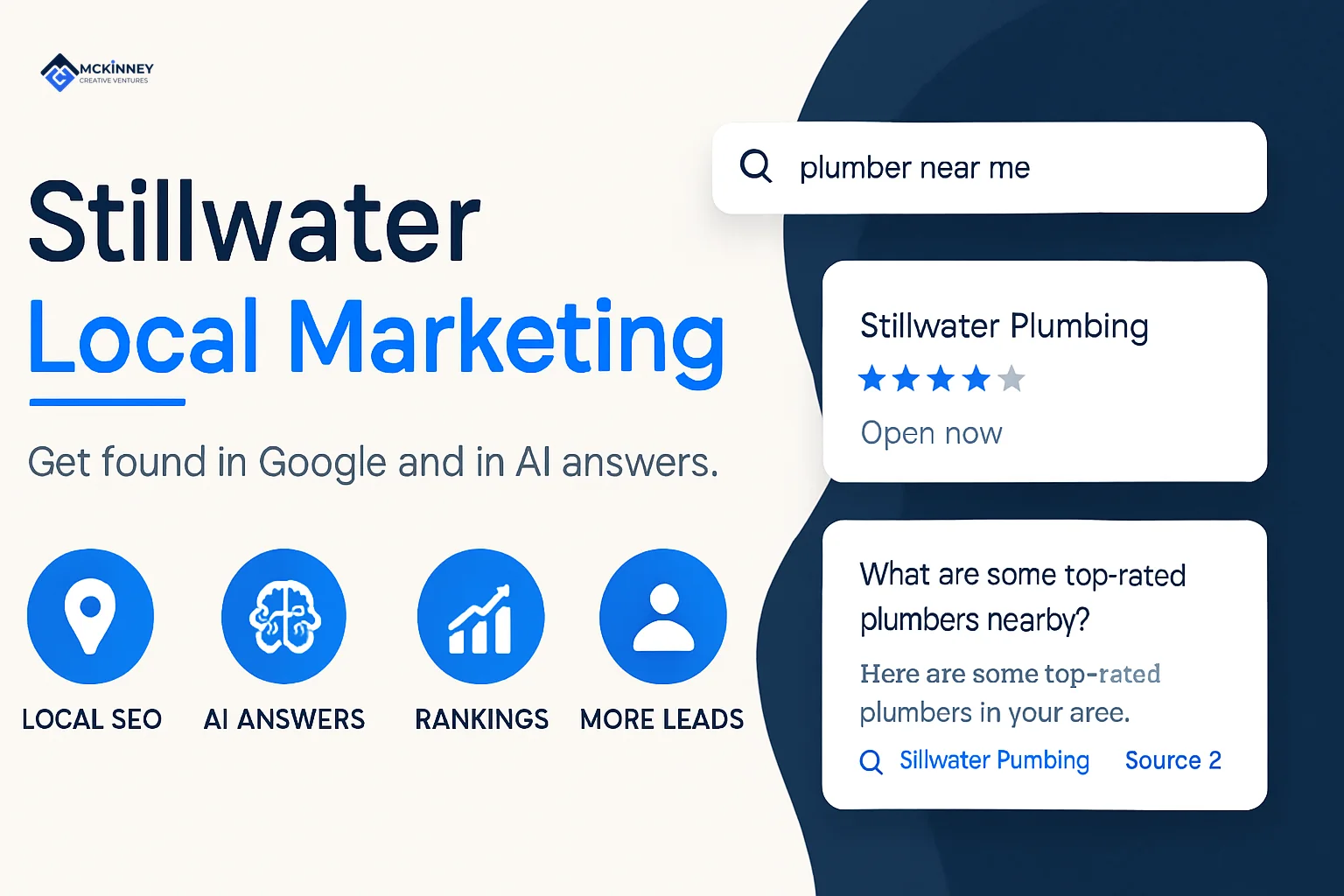
Getting Your Stillwater Business Found in Local Search
Stillwater is a historic river town with tourist traffic and a residential service base. Here is the local search system that gets your business found by both, from Google Business Profile to reviews to St. Croix Valley content.
Ready to Grow Your Business?
Book a strategy call to discuss how we can implement these systems and strategies to help your business scale.
Book a Strategy Call