Why Blog Post Management Is the Key to Sustainable Growth

Sam McKinney
Founder & Lead Strategist • January 9, 2026
Overview
Blog post management is the system that turns scattered content efforts into a reliable growth engine for your business. It includes everything from planning and writing to.
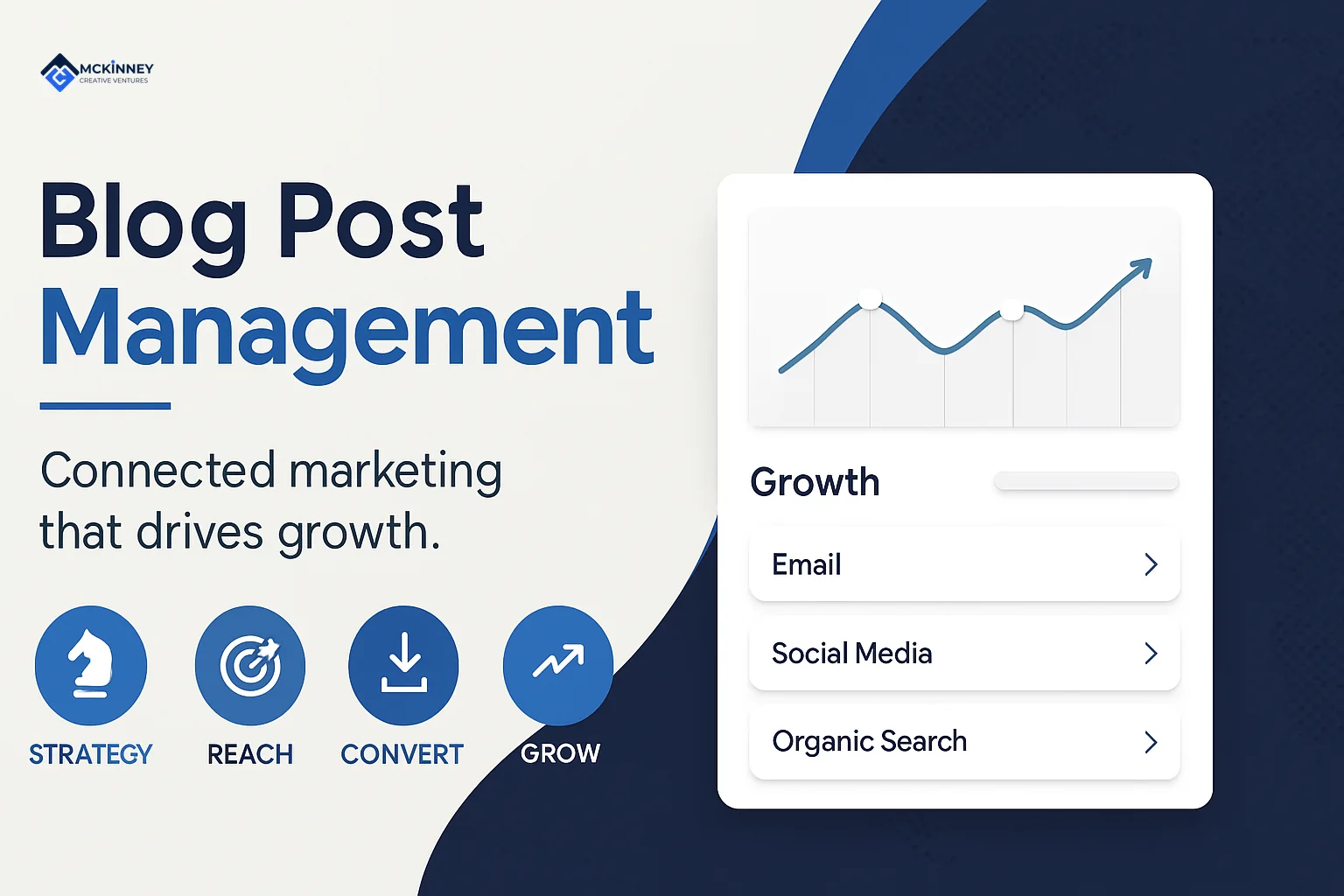
Blog post management is the system that turns scattered content efforts into a reliable growth engine for your business. It includes everything from planning and writing to publishing, promoting, and updating your posts.
What effective blog post management includes:
- Planning: Identifying topics your audience needs and scheduling posts in advance
- Creating: Writing, editing, and formatting content that serves your readers
- Publishing: Following a consistent schedule that builds trust and visibility
- Promoting: Sharing content through social media, email, and community engagement
- Analyzing: Tracking what works and using data to improve future posts
- Updating: Refreshing older content to keep it relevant and ranking
Most small business owners start a blog with good intentions. They publish a few posts, then life gets busy and the blog sits untouched for months. Without a system, blogging becomes another task that falls through the cracks.
The difference between a forgotten blog and one that drives leads is not talent or budget. It is having a repeatable process. When you treat your blog like a strategic asset instead of a random collection of posts, it becomes a tool that consistently attracts new customers and builds your authority in the market.
A structured approach to blog post management means you know what you are writing about next week, you have a clear workflow from draft to publish, and you track what content actually moves the needle for your business. It turns blogging from a chore into a system that works for you.
I'm Sam McKinney, and I have spent over 15 years helping service-based businesses build smarter marketing systems through blog post management and automation. My focus is on creating workflows that fit your business so your content supports growth instead of creating more work.
Building Your Content Strategy: The Blueprint for Success
Before we even think about writing, we need a solid strategy. This is where we lay the foundation for a blog that truly serves your business and your customers in the East Metro and St. Croix Valley. Our goal is to move beyond just putting words on a page and instead create content that genuinely resonates and drives results.
The purpose of your blog should be unique to your business, but the key is always to focus on value for your audience. A blog is a fantastic way to include relevant, useful, original, and factual information on your website. Every blog post becomes a new page filled with keywords and fresh content for search engines to index, like putting up a new sign for your business.
Defining Your Audience and Niche
Who are we writing for? This is the most crucial question. We need to define who your ideal customer is and what they are looking for. Are they new homeowners in Woodbury seeking advice on home maintenance? Are they small business owners in Stillwater looking for marketing tips? Understanding their needs, their questions, and their pain points is the first step.
When we cater to their needs, we’re not just writing content; we’re solving problems. This helps us find your unique perspective and allows your business to stand out in the competitive St. Croix Valley market. By focusing on practical value, we ensure our content is always helpful and relevant. This deep understanding of your audience will guide every piece of content we create, making your blog a trusted resource.
Planning Your Content with Keywords
Once we know who we're talking to, we need to understand what they are searching for. This is where keyword research comes into play. Keyword research isn't just about finding popular terms; it's about uncovering the exact phrases your audience types into search engines when they need solutions that your business can provide.
For local businesses in the East Metro, this often means focusing on long-tail keywords. For example, ranking for a broad term like "plumber" might be challenging due to high competition. However, a long-tail keyword like "emergency plumber in Cottage Grove MN" is far more specific, easier to rank for, and attracts someone with a clear, immediate need. Long-tail keywords account for about 70% of all search queries, offering a significant opportunity for targeted traffic.
We use keyword research to guide our topics and ensure we're addressing real user intent. Tools like Keywordtool.io, Ubersuggest, Semrush, or Ahrefs can help us expand our keyword lists and evaluate metrics like search volume and competition.
To keep your blog organized and findable, we'll use categories and tags effectively. Categories act as broad sections for your content, while tags provide more granular descriptions, helping both users and search engines navigate your site. This thoughtful organization is a core component of effective blog post management.
Mastering Your Blog Post Management Workflow
With a solid strategy in place, the next step is to master the day-to-day workflow of content creation. This is where we turn our plan into action, ensuring every post goes from idea to published content smoothly and efficiently. Creating a repeatable process is key to consistent success.
The Content Creation Process
Our content creation process begins long before we start writing. We follow a pre-writing checklist to ensure every post is set up for success:
- Consider the purpose: How will this post benefit our audience? Will it help solve a problem for a customer in Stillwater or provide valuable information for a homeowner in Woodbury? Every post should provide value.
- Pick a keyword: Each post targets a specific keyword to increase search engine traffic over time. We focus on matching user intent.
- Draft a headline: The headline is critical. Five times more people read the headline than the body copy. We aim for descriptive, compelling headlines, ideally under 65 characters to avoid truncation by Google. Headline analysis tools can help us craft titles that maximize clicks.
- Research and plan: Thorough research and outlining before writing make the process easier and result in higher-quality content. An outline acts as a roadmap, making the writing process much more manageable.
- Pick a category: Assigning the post to an appropriate category helps with organization and user navigation.
- Fill in SEO information: We use tools like Yoast SEO to manage the focus keyword, SEO title, and meta description for each post. While meta descriptions don't directly impact SEO rankings, they can significantly boost click-through rates from search results.
Once these steps are complete, we move to writing the first draft. We aim for an engaging introduction that hooks readers and clearly states what they will gain. The main body develops our insights with clarity and logical order, supported by examples relevant to our local audience. We always strive for a conversational and authentic writing style, making our content relatable and easy to read.
Editing is a crucial step. We edit ruthlessly for clarity, grammar, and conciseness, using tools like Grammarly or Hemingway to catch errors and improve readability. Formatting for visual appeal is equally important. We use short sentences, bullet points, headings, and images to break up text and make it easy to scan, especially on mobile devices. Adding visuals and images that support our message, such as photos of our work in the East Metro or infographics explaining complex concepts, improves engagement.
Essential Tools for Streamlined Blog Post Management
To keep our blog post management efficient, we rely on a suite of tools that simplify the entire process. A content calendar is non-negotiable. It allows us to plan topics, assign deadlines, and ensure a consistent publishing schedule. We often use Google Sheets for this, but more robust project management tools like Basecamp, Slack, or Trello can also be invaluable for teams.
For writing and editing, we use not only Grammarly and Hemingway but also internal style guides to maintain a consistent brand voice. When crafting headlines, we leverage headline analysis tools from CoSchedule or Sharethrough to optimize for clickability and SEO. The benefit of using a single workspace, or tools that integrate seamlessly, is that it keeps our entire process organized, reducing miscommunication and ensuring nothing falls through the cracks.
Balancing Quality and Quantity in Your Blog Post Management
One of the most common questions we hear is about publishing frequency. While statistics show that blogs publishing more than 16 times per month can receive 3.5 times the traffic of those publishing less frequently, this isn't always achievable or even advisable for every small business. Our mantra is: "Don't sacrifice quality for quantity."
Consistent content publishing can lead to 30% more traffic per post and even save about an hour per post due to a streamlined workflow. The key is consistency, not necessarily daily posts. It's better to publish one high-quality, valuable post per week that truly serves your audience than to churn out three mediocre posts that offer little insight. We recommend starting with a manageable schedule that you can realistically maintain without burning out. Focus on high-value posts that solve real problems for your clients in Minneapolis, St. Paul, or River Falls, and avoid the trap of publishing just to fill the calendar.
From Publish to Promote: Amplifying Your Content's Reach
Publishing a great blog post is only half the battle. The other half, equally important, is promotion. Without a plan to spread the word, even the most brilliant content might go unnoticed. This stage of blog post management focuses on getting your valuable insights in front of the right eyes in the East Metro and St. Croix Valley.
Creating a Consistent Publishing Schedule
A consistent publishing schedule is vital for building trust with your audience. When readers know when to expect new content from your business, they are more likely to return. While aiming for high frequency can be beneficial, as HubSpot notes that consistent posting, like 16+ times a month, often boosts traffic, we prioritize what's sustainable for your business. For many small businesses, starting with a realistic frequency, perhaps one or two quality posts per week, is a more achievable goal. The most important thing is to stick to it. This predictable rhythm builds anticipation and loyalty.
We plan our calendar in a way that fits your business's resources and goals. This might mean mapping out seasonal topics for businesses in Hudson, WI, or addressing common questions for clients in Lake Elmo, MN. The key is to ensure that your blog serves as a consistent, reliable source of information.
Promoting Your Content After Hitting Publish
Once a post is live, our work shifts to amplification. This is where we leverage various channels to extend your content's reach:
- Sharing on Social Media Channels: Social media is a powerful tool for blog promotion. In fact, 63% of CoSchedule's blog traffic comes from social media. We share posts across relevant platforms like Facebook, LinkedIn, and even local community groups, tailoring our message to each audience. Tools like Hootsuite and Buffer can help us schedule these shares efficiently, ensuring consistent visibility without constant manual effort.
- Leveraging Your Email List: Your email list is one of your most valuable assets. Newsletters are particularly powerful; they let you share exclusive insights or summarize popular topics in a way that feels personal. Moving from simple subscriptions to dedicated email opt-ins can transform casual readers into loyal fans, offering them unique content they won’t find anywhere else. We use our email list to notify subscribers about new posts, highlight key takeaways, and drive them back to your blog.
- Including Blog Links in Print or Offline Marketing: Don't underestimate the power of bridging your offline audience to your online content. For our local businesses, this means including blog links in print materials, flyers, business cards, or even during local events and trade shows. This helps introduce new readers to your blog and extends your reach beyond digital channels.
- Repurposing Content into Different Formats: To maximize the impact of each blog post, we repurpose the content into various formats. A comprehensive guide can become a series of social media graphics, a short video, an infographic, or bullet points for a presentation. This ensures your message reaches different audiences on their preferred platforms.
- Engaging with Other Blogs and Online Communities: Participating in relevant online communities, leaving thoughtful comments on other industry blogs, and even guest posting (where appropriate and strategic) can drive referral traffic and build your authority. This reciprocal engagement helps expand your network and introduces your content to new readers.
- Submitting Posts to Google for Faster Indexing: To ensure Google knows about your new content quickly, we submit new pages directly to Google. Setting up Google Search Console for your site is essential. This free tool helps Google index your content faster, potentially boosting rankings and organic reach.
The Feedback Loop: Using Data and Engagement to Grow
Once your content is out there and being promoted, the work isn't over. This is where effective blog post management truly shines, by analyzing what's working, engaging with your audience, and continuously improving. This feedback loop is crucial for sustainable growth.
Decoding Your Analytics
Understanding your audience's behavior is paramount. We use analytics tools to decode reader behavior and preferences, helping us understand which metrics matter most for small businesses. We monitor views, engagement (like time on page and bounce rate), and conversion rates to see how readers interact with your posts. Tools like Jetpack Stats (for WordPress users), Google Search Console, and Google Analytics provide invaluable data.
Google Search Console, for instance, shows us what search queries people are using to find your content and how your pages are ranking. This data helps us plan future topics, optimize existing content, and refine our keyword strategy. By tracking the success of your blog posts, we can inform future content strategy, ensuring we're always creating what your audience needs.
Keeping Content Fresh and Engaging
The digital landscape is constantly evolving, and so should your content. Refreshing outdated content is a great way to maintain its relevance and improve its rankings. We regularly review older posts and update them with new information, statistics, or examples relevant to our local market. This shows search engines that your content is up-to-date and valuable, and it gives us a chance to re-promote evergreen content.
Managing comments and fostering community discussion is another vital aspect. We encourage comments and respond thoughtfully, building a loyal readership. Comments that identify problems or disagree with content points can foster healthy conversation and add quality to discussions. We also explore using interactive content, such as polls, quizzes, or surveys, to spark engagement and gather valuable feedback directly from your audience. This helps us understand what content resonates most and strengthens reader loyalty by making them feel heard.
Frequently Asked Questions
What is the best publishing frequency for a new blog?
For a new blog, we always recommend starting with a schedule you can consistently maintain. Whether that's once a week, bi-weekly, or even just once a month, consistency and quality matter far more than sheer volume. We've seen that starting slow helps avoid burnout and allows you to build momentum. Once you have a rhythm, you can track your results and gradually increase frequency as your resources allow and your audience grows.
How long should it take to write a blog post?
The time commitment for a blog post can vary significantly. From idea generation, keyword research, outlining, writing, editing, and formatting, a well-written and useful post often takes between 4 to 8 hours. This includes creating graphics and ensuring all SEO elements are in place. Having a clear blog post management workflow, complete with a pre-writing checklist and dedicated tools, helps make this process much more efficient.
Do I really need to update old blog posts?
Absolutely, yes! Refreshing outdated content is one of the most effective strategies for improving your blog's performance. Regularly updating older posts with new information, current statistics, or fresh examples shows search engines that your content is valuable and up-to-date. This can significantly improve your search rankings and drive new traffic to content that you've already invested time in creating. It's a smart way to maximize your content's lifespan and impact.
Putting It All Together: Your Path to Sustainable Blog Growth
Mastering blog post management is about more than just writing words; it's about building a strategic asset for your business. By implementing a systemized approach from planning to promotion and review, you transform your blog from a sporadic effort into a powerful, consistent growth engine. This shift from one-off tasks to a well-oiled workflow ensures your content consistently attracts new clients, builds your authority, and supports your overall marketing goals in the East Metro and St. Croix Valley.
We understand that as a small business owner, your time is precious. That's why we focus on creating sustainable systems that deliver long-term results without requiring you to become a full-time content marketer. A consistent blog, managed effectively, is a cornerstone of a strong online presence and a reliable source of leads for your business.
If you're ready to turn your blog into a strategic asset and ensure your content consistently works for you, let's talk about how our fractional marketing team can help. Learn more about our blog and content management services and find how we can streamline your content efforts for sustainable growth.
If you want a connected marketing system that brings this together for your business, we can help. Book a free strategy call and we will map out a plan built around your goals. No pitch, just a clear next step.
Written by
Sam McKinney
Founder & Lead Strategist, McKinney Creative Ventures
Sam McKinney helps local service businesses across the Twin Cities East Metro and St. Croix Valley grow through connected marketing systems. Websites, SEO, CRM, and AI automation built to work together instead of in isolation.
More about MCVRelated Articles
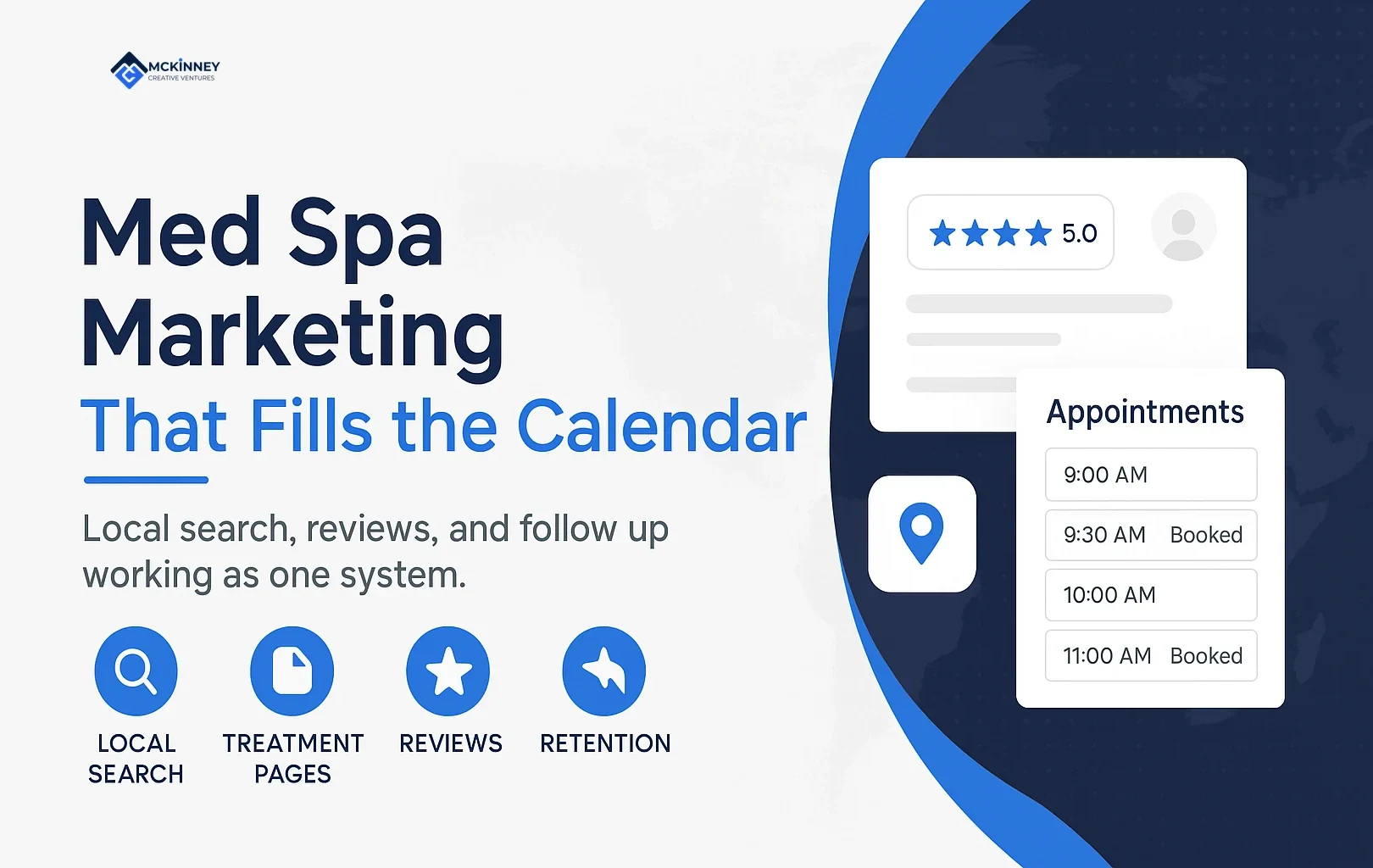
Med Spa Marketing in the Twin Cities: Keeping the Calendar Booked
Aesthetics practices lose money in the gaps between local search, reviews, and follow up. Here is the full med spa marketing system for the East Metro and St. Croix Valley, plus the federal rules that now govern it.

Hudson, WI Service Businesses: Marketing Across the Border
A Hudson service business that works both sides of the St. Croix is running one brand across two states, two licensing regimes, and two separate local search markets. Here is how to set that up so neither side gets treated as an afterthought.
Ready to Grow Your Business?
Book a strategy call to discuss how we can implement these systems and strategies to help your business scale.
Book a Strategy Call