The Deal Fixer: Elizabeth Yang on Trust, Decisions, and the $50,000 Price of Being Nice

Sam McKinney
Founder & Lead Strategist • July 16, 2026
Overview
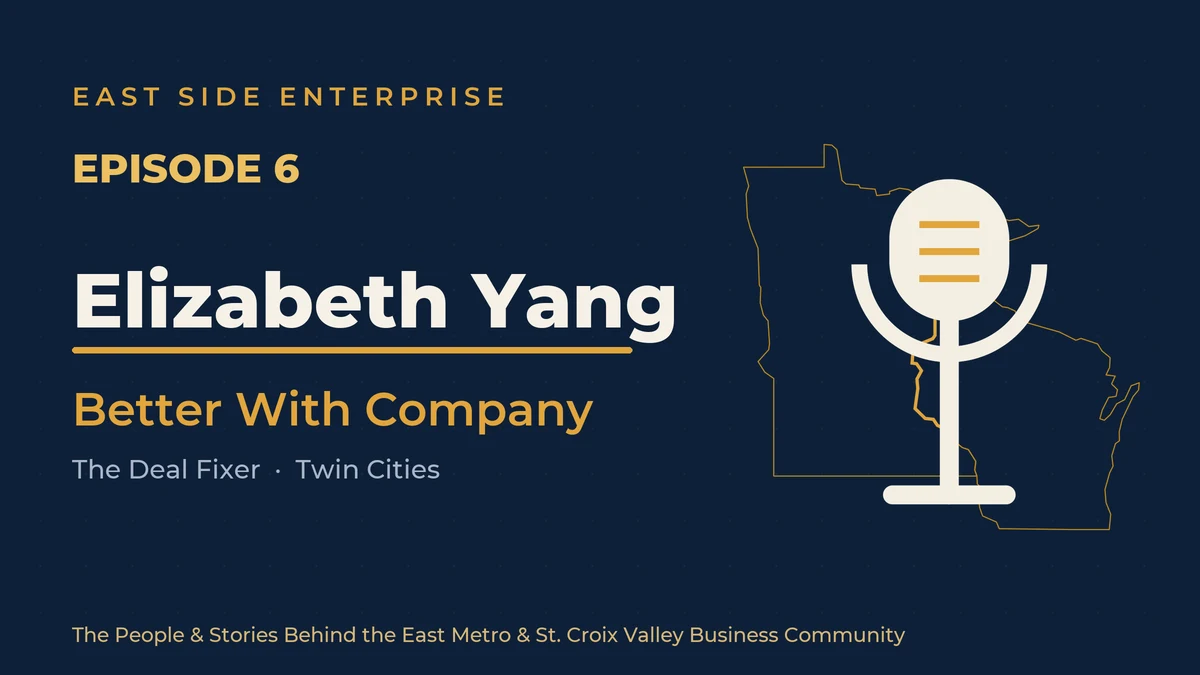
Elizabeth Yang started her business by accident, when a stranger asked how much she charged and she had no answer. The Deal Fixer on holding a decision under pressure, and why she cured her over-giving by raising her prices.
A stranger messaged Elizabeth Yang on LinkedIn. She was desperate, she said. Her business was stuck. Could they jump on a call?
Elizabeth took the call. The woman described her symptoms. Do you think you can help? Yeah, Elizabeth said, I think I can. Then came the question that started a company.
"She said, how much do you charge? I was like, I don't know. I guess I got to figure that out. I guess I got to start a business."
That is the actual origin of Better With Company. Not a plan, not a business model, a question she couldn't answer. Two months later, that client landed her first corporate deal. Elizabeth had caught the bug.
Today she goes by The Deal Fixer, and she was a guest on East Side Enterprise. Companies call her when deals feel like they should be moving and just sit there. Her work lives in an unusual place: half sales process and strategy, half whatever is happening inside the person doing the selling.
Growing by force
Elizabeth was born and raised in Fresno and landed in Minnesota at twelve. She still won't quite claim to be a local. "I think it's the winters." She spent four years in Boston somewhere in the middle, and her accent became, in her word, a chameleon. She absorbs the pace and tone of whoever is across from her.
That turns out to be the whole episode in miniature. The thing that became her career started as a survival trait. She studies human psychology now, NLP, mirroring, the mechanics of how two people actually bond. But she describes it more simply when she talks about her first language.
"Even in my native language, I can travel to anywhere in the world. And as soon as I hear the Hmong language, there's just this immediate instant like I'm home."
Early in the conversation she lays out a philosophy that sounds like advice: whether or not you choose it, you are going to grow, so decide whether you grow by force or on purpose. It's only much later that she admits it was autobiography. "I'm someone who's been very resilient, not by choice, but by accident. I was forced to grow until I got to a point where I was like, whether or not I want to grow, I got to grow. Let me just be intentional about it."
The decision people have already made
The center of Elizabeth's work is something she calls decision leadership, and her read on it cuts against how most people think about selling.
"It's not that people are undecided. It's the fact that they've actually made a decision in their heart. It's the execution and deciding to act on that decision that's really hard, because they're either letting people down or they're afraid of being judged or there's some fear that comes up. And so everything that you want really is within a decision, because it's your ability to hold that decision under pressure."
She tells a story that makes it concrete. A mortgage broker wanted to scale. His first client had been his uncle, a man who was like a second father to him. He couldn't get the application processed in time, and his uncle passed away. Years later he was still carrying it, and it showed up in his business as a slow, stalling pipeline. Two months after working through it, he messaged her: my hands no longer shake when I pick up an application to process it. He'd also built the partnerships he'd been chasing.
Her tell for that kind of block is what she calls the three P's: procrastination, paralysis of analysis, perfectionism. Nobody calls her and says they're stuck. They call and say sales feel slow.
The $50,000 price of being nice
Elizabeth describes her old self bluntly: an over-giver without discernment. Endless free help, the wrong clients, the icky feeling of pushing. The fix she landed on wasn't willpower or better boundaries or a script.
"So here's how I cured my over-giving without discernment. I just charged high ticket. Like I'm not the cheapest advisor, consultant, coach on the block."
It's arithmetic, not virtue. She raised her price until generosity stopped costing her anything, and the inner battle stopped. "There was no guilt. There was no inner fighting and battle happening."
The corollary is the line that will stick with anyone who has ever tried to be everything to everyone:
"You're not going to be able to convert your Walmart shoppers into Nordstrom shoppers, and it has nothing to do with love or care. It's just that that's not where they're at, but that's where you're at. Am I going to keep delivering Nordstrom service to Walmart shoppers and then beat myself up over it? That's a choice. That's a decision."
Her rule for the clients who don't come with you when you raise prices: bless and release, or grandfather them in with love.
What she'd tell little Elizabeth
Ask her what she'd say to her younger self and she doesn't reach for a tactic. She says be authentic, and then immediately names why that's harder than it sounds. She's a mother of two, eighteen and sixteen, and she's caught in a bind she says out loud: "Here I am teaching my kids to conform at school, yet when he becomes an adult, he's going to have to unlearn all of this. How do I do this ethically as a parent?"
And on the money question underneath all of it:
"Money doesn't buy happiness. I 100% agree with you. But neither does being broke. What money affords you is options to create the life that makes you happy."
Her closing line is the best thing in ninety-nine minutes, and it arrives after a long pause:
"The fear of judgment releases its power when you stop agreeing with it."
Listen to the full conversation
This is a slice of a long, sharp, generous conversation that also gets into loss aversion, why networking is business dating, the five trust signals, just-in-time learning, the myth of job security, and why you just have to pick your hard.
Listen to the full episode of East Side Enterprise with Elizabeth Yang at mckinneycv.com/podcast, or on Spotify and Apple Podcasts.
Frequently Asked Questions
Who is Elizabeth Yang?
Elizabeth Yang is the founder of Better With Company, a sales advisory practice in the Greater Minneapolis-St. Paul area. She goes by The Deal Fixer and works with leaders, teams, and business owners on deals that stall. Her background is in healthcare and corporate business consulting, including UnitedHealth Group, with a focus on product innovation and technology.
What does Better With Company do?
Better With Company helps companies move deals that should be moving and are not. The work spans both sides of the problem: the sales process and strategy, and the internal blocks, beliefs, and fears that keep people from executing.
What is decision leadership?
Decision leadership is Elizabeth's term for the ability to hold a decision under pressure. Her argument is that people are rarely genuinely undecided. They have usually already decided in their heart, and the hard part is acting on it in the face of judgment, fear, or letting someone down.
Written by
Sam McKinney
Founder & Lead Strategist, McKinney Creative Ventures
Sam McKinney helps local service businesses across the Twin Cities East Metro and St. Croix Valley grow through connected marketing systems. Websites, SEO, CRM, and AI automation built to work together instead of in isolation.
More about MCVRelated Articles
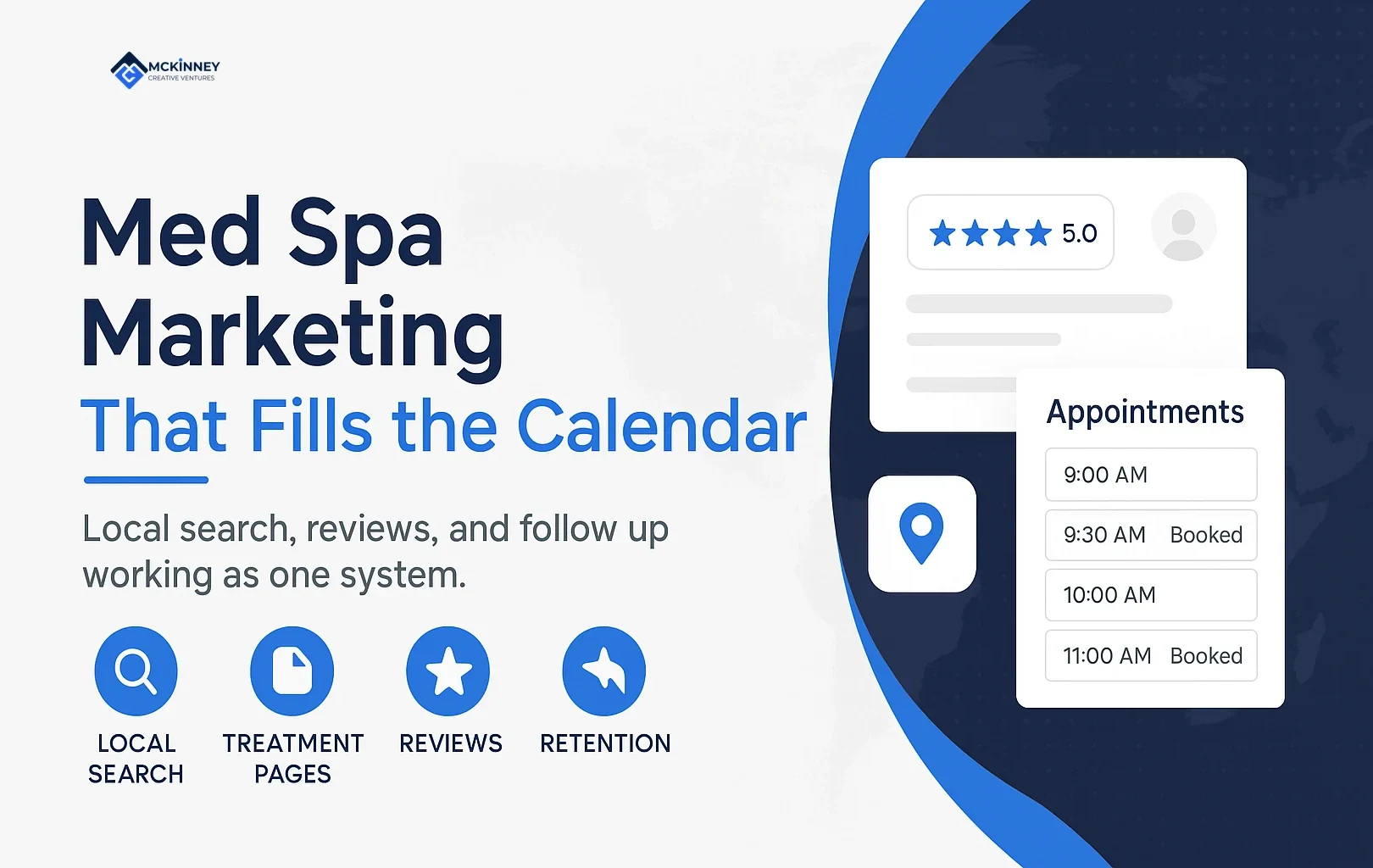
Med Spa Marketing in the Twin Cities: Keeping the Calendar Booked
Aesthetics practices lose money in the gaps between local search, reviews, and follow up. Here is the full med spa marketing system for the East Metro and St. Croix Valley, plus the federal rules that now govern it.
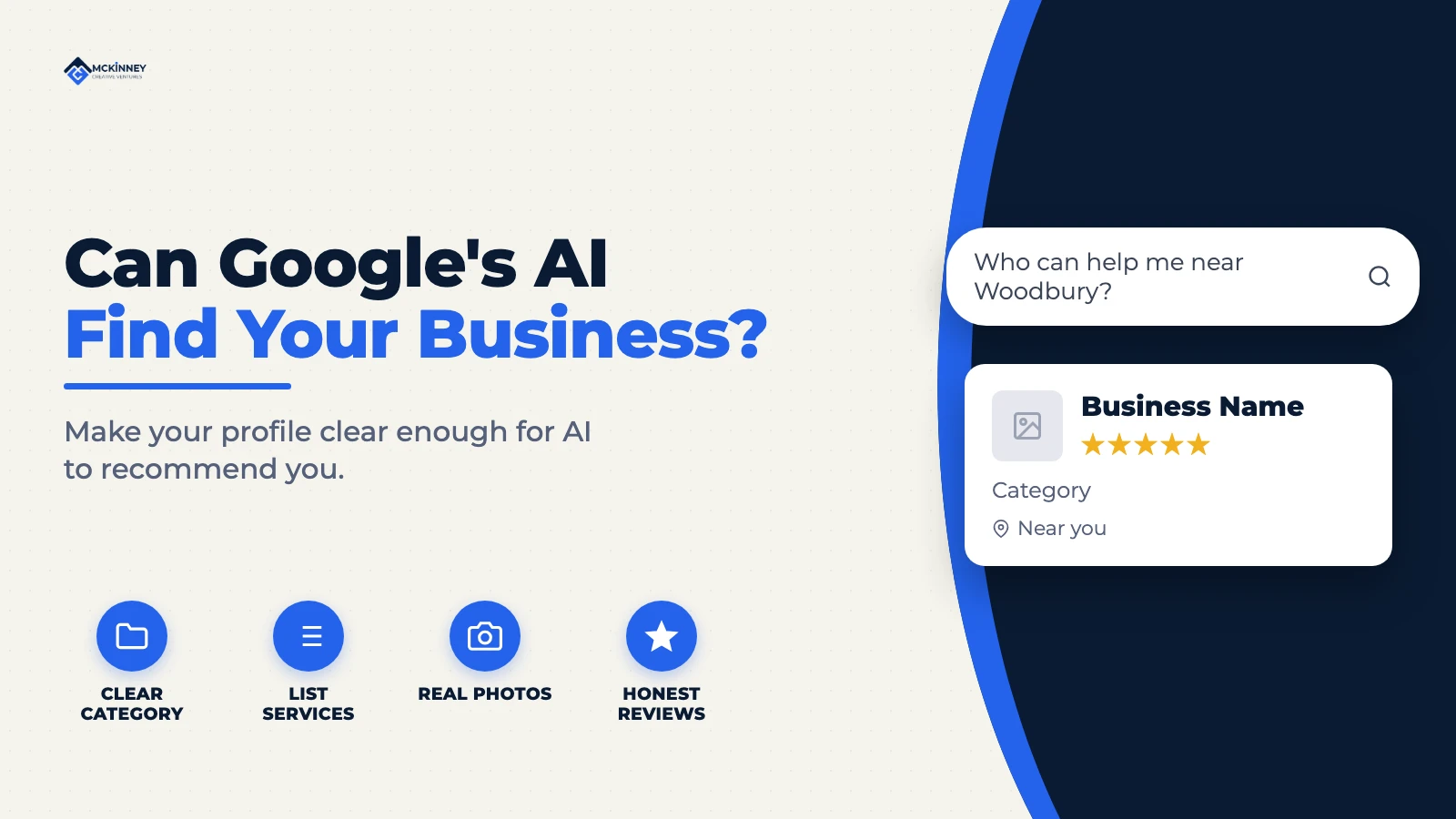
Can Google's AI Actually Find Your Business?
People ask Google full questions now, not keywords. With AI-powered Maps, your Google Business Profile is how Google understands your business in the first place. Here is how to make it clear enough to get recommended.
Ready to Grow Your Business?
Book a strategy call to discuss how we can implement these systems and strategies to help your business scale.
Book a Strategy Call